

Los perros nos ofrecen una lealtad incondicional; lo mínimo que podemos hacer a cambio es protegerlos de las amenazas que acechan en cada paseo. Las garrapatas se encuentran entre las amenazas más persistentes, y, a diferencia de muchas otras, están activas durante la mayor parte del año. Comprender cómo se comportan las garrapatas, cuándo son más peligrosas, y qué métodos de protección funcionan realmente es la forma más fiable de mantener a tu perro a salvo en todas las estaciones.
Por qué las garrapatas son un riesgo real para la salud de los perros
Las garrapatas son arácnidos —estrechamente relacionados con las arañas— que necesitan la sangre de los mamíferos para completar su ciclo de vida y alcanzar la madurez. Localizan a un huésped, se adhieren a la piel, y se alimentan lenta y silenciosamente. Su saliva contiene un anestésico natural, lo que significa que la picadura no causa dolor y rara vez se nota hasta que la garrapata lleva ya un tiempo alimentándose. Esto es precisamente lo que las hace peligrosas: para cuando la detectas, es posible que ya haya transmitido patógenos.
Las garrapatas son vectores de una serie de enfermedades graves, entre ellas la Borrelia burgdorferi (, la bacteria responsable de la enfermedad de Lyme), la babesiosis, la anaplasmosis, y otras. Estas afecciones pueden causar complicaciones graves a largo plazo en los perros y no siempre son evidentes de inmediato a partir de los síntomas. La detección precoz y la prevención son significativamente más eficaces que el tratamiento a posteriori.
Cuándo y dónde son más activas las garrapatas
La temporada de garrapatas en Europa r UNS va desde principios de primavera hasta finales de otoño —normalmente de marzo a noviembre—, con picos de actividad en abril y mayo y de nuevo de agosto a octubre. Durante estos meses, es esencial realizar revisiones diarias después de cualquier salida al aire libre. Temperaturas superiores a 4 °C son suficientes para la actividad de las garrapatas, lo que significa que los inviernos suaves pueden prolongar la temporada de forma impredecible.
Las garrapatas se asocian comúnmente con los bosques y la hierba alta, pero esto subestima los lugares donde realmente viven. Los setos de jardín, los arbustos ornamentales, los parques urbanos e incluso un breve paseo por el arcén junto a la acera pueden exponer a un perro a las garrapatas. Las garrapatas no saltan ni vuelan: esperan en la vegetación a alturas que suelen oscilar entre 20 y 80 cm, y luego se adhieren a los animales o seres humanos que pasan por allí mediante contacto directo. Cualquier perro que salga al aire libre corre riesgo.
Métodos de prevención: qué hay disponible y cómo funcionan
Repelentes ultrasónicos
Los repelentes ultrasónicos de garrapatas para mascotas son dispositivos sin productos químicos que se colocan en el collar o el arnés. Emiten ondas sonoras de alta frecuencia que son imperceptibles para los humanos y los perros, pero desorientan a las garrapatas, reduciendo su capacidad para localizar y adherirse a un huésped. No requieren aplicación, no entrañan riesgo de toxicidad y son aptos para perros de todas las edades, incluidos los cachorros. Son especialmente adecuados para propietarios que prefieren evitar los productos químicos o como complemento de otros métodos durante los periodos de alto riesgo.


Tickless
Tickless Repelente ultrasónico de garrapatas para perros - Negro
Precio normal €34.69Precio unitario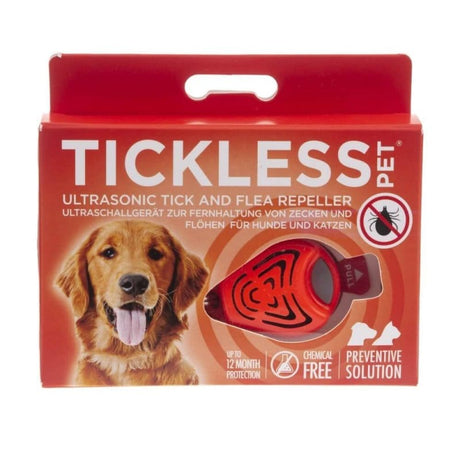

 5 % de descuento
Tickless
Tickless Repelente ultrasónico de garrapatas para perros - Naranja
Precio de venta €32.69 Precio normal €34.49Precio unitario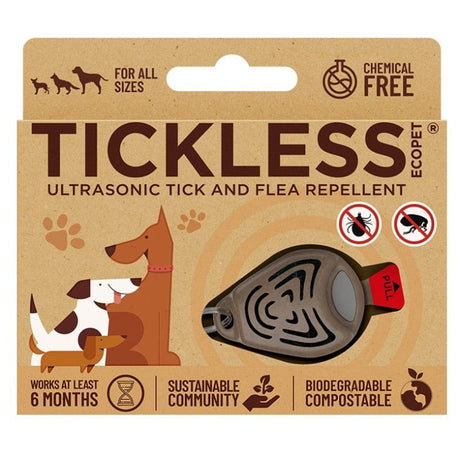
 10 % de descuento
Tickless
Tickless Eco Pet Repelente Ultrasónico de Garrapatas - Marrón
Precio de venta €30.59 Precio normal €33.99Precio unitario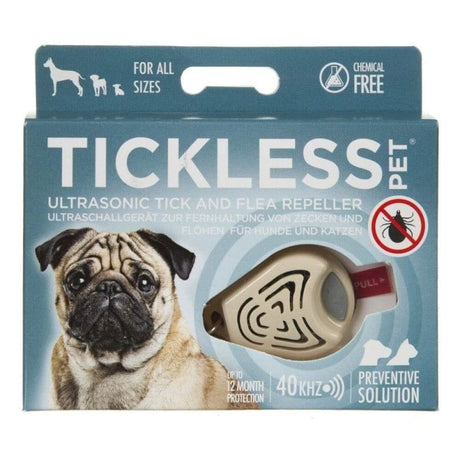


Tickless
Tickless Repelente Ultrasónico de Garrapatas para Mascotas - Beige
Precio normal €29.49Precio unitario


Aceites y brumas repelentes naturales
Los productos repelentes de origen vegetal —aceites y sprays formulados con ingredientes naturales— ofrecen una opción suave y libre de químicos para perros con piel sensible o para su uso en cachorros. Aplicados sobre el pelaje antes de los paseos, crean una barrera olfativa que resulta poco atractiva para las garrapatas. Se recomienda utilizarlos como una capa de protección complementaria junto con otros métodos, especialmente durante la temporada alta de garrapatas. Cistus incanus (jara pringosa) merece una mención especial aquí. Esta hierba es rica en polifenoles —compuestos aromáticos volátiles— que, cuando se ingieren o se aplican de forma tópica, alteran el olor corporal del animal y pueden hacerlo menos atractivo para las garrapatas, las pulgas y los mosquitos. Se puede preparar en forma de infusión y añadir al agua de bebida o utilizar para enjuagar el pelaje antes de los paseos. Se trata de un enfoque tradicional que suscita un interés creciente entre los propietarios de mascotas que buscan un apoyo natural, aunque funciona mejor como complemento —y no como sustituto— de los productos repelentes probados.
Tratamientos Spot-On, Collares, Sprays, y Comprimidos
Los tratamientos Spot-On se aplican directamente sobre la piel en la parte posterior del cuello y a lo largo de la columna vertebral. El principio activo se distribuye a través de la capa sebácea de la piel y proporciona protección sistémica en todo el cuerpo. El efecto comienza en un plazo de 24 a 48 horas y suele durar cuatro semanas. Los collares antigarrapatas liberan sustancias activas gradualmente a lo largo de varios meses, lo que supone una buena inversión para una temporada larga, siempre que el collar se ajuste correctamente al cuello, sin quedar holgado. Los comprimidos orales actúan de forma sistémica a través del torrente sanguíneo y son muy eficaces; requieren que el perro acepte el comprimido con la comida y son más adecuados para perros sin dificultades para tragar. Los sprays son más adecuados para cachorros y perros pequeños, en los que la dosificación adecuada al peso de los productos spot-on resultaría poco práctica. Todas estas opciones requieren una consulta veterinaria o, como mínimo, una revisión cuidadosa de la etiqueta del producto para conocer las restricciones de edad, peso, y raza antes del primer uso.
Cómo revisar a su perro después de un paseo
Las revisiones sistemáticas tras el paseo son tan importantes como cualquier producto preventivo. Los perros tienen una ventaja natural sobre los humanos, ya que su pelaje actúa como barrera: las garrapatas suelen permanecer en el pelaje durante algún tiempo antes de llegar a la piel, lo que ofrece un breve margen para encontrarlas y retirarlas antes de que se adhieran. Después de cada paseo durante la temporada de garrapatas, pase los dedos sistemáticamente por el pelaje, prestando especial atención a:
- Alrededor y dentro de las orejas
- Debajo del collar y alrededor del cuello
- La ingle y la parte interna de los muslos
- Alrededor de la cola y entre los dedos de las patas
- Debajo de las patas delanteras (axilas)
Si encuentra una garrapata ya adherida, retírela lo antes posible. Separe el pelaje, y utilice unaspinzas de punta fina o un instrumento específico para la extracción de garrapatas y agarre la garrapata lo más cerca posible de la superficie de la piel. Tire hacia arriba con una presión firme y uniforme —no gire ni apriete el cuerpo—, ya que esto puede provocar que las piezas bucales se rompan y permanezcan en la piel. Tras la extracción, limpie la zona de la picadura con un antiséptico. Si no consigues extraer la garrapata por completo o si el perro presenta síntomas en los días posteriores a la picadura (letargo, pérdida de apetito, articulaciones inflamadas, fiebre), consulta a un veterinario.
Tu centro completo de protección para mascotas
Explora nuestra gama de protección contra garrapatas y pulgas para obtener una visión general completa de los productos específicos para mascotas, y explore la amplia sección de mascotas de Medpak para encontrar opciones de aseo, higiene, y suplementos — todo ello Hipp enviado rápidamente desde dentro de la UE.
Este artículo es solo informativo y no sustituye el consejo médico. Si tienes problemas de salud, estás embarazada, en periodo de lactancia o tomas medicamentos, consulta a un médico o farmacéutico. Los complementos alimenticios no sustituyen una dieta variada.


